Moss & Stem
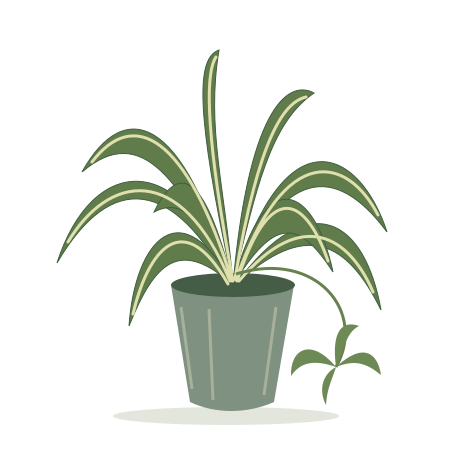
A spider plant makes a small fountain of narrow, arching leaves. Many familiar cultivars carry cream or white stripes, although plain green forms exist too. Long, wiry stems can bear small white flowers and miniature plantlets, giving a mature plant a pleasingly untidy outline. A shelf or hanging pot lets those stems fall freely without getting caught underfoot.
- Light
- Moderate to bright, indirect
- Water
- When the upper soil dries
- Habit
- Arching, with plantlets
- Pets
- Considered non-toxic
Keep the light gentle
Moderate to bright indirect daylight suits spider plant well. Strong direct sun can scorch the leaves, so try a position beside the window rather than directly in an intense beam. A dimmer spot may be tolerated, but do not expect equally vigorous growth. Notice the conditions at leaf height, not just the brightness of the room.
Check, then water through
Feel the upper few centimetres of mix. When they are dry, lift the pot and check below the surface before watering. The aim is a root ball that receives a thorough drink, then gradually loses moisture, rather than staying saturated. Water until excess escapes through the drainage holes and empty the saucer. Choose a free-draining houseplant mix; a decorative outer pot must not trap runoff. Fleshy roots store some water, but that is not a reason to leave the plant dry indefinitely.
Brown tips are a clue, not a verdict
Brown leaf tips can have several causes, including uneven moisture, excess fertiliser salts, or sensitivity to fluoride in water. Review watering and feeding before changing everything at once. If water quality seems involved, try rainwater from a clean source or low-mineral water. Old brown tissue will not turn green again; judge changes by fresh growth. If roots fill the pot and water runs straight through, consider repotting one size up.
Reference consulted: NC State Extension · Chlorophytum comosum.