Moss & Stem
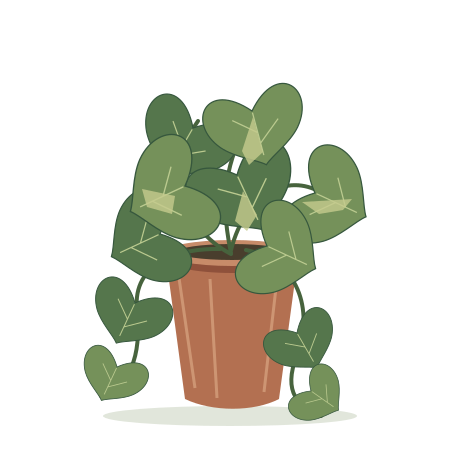
Pothos starts modestly: a few glossy, heart-shaped leaves and a stem leaning over the edge of its pot. Given time, those stems become long vines, trailing from a shelf or climbing a support with small aerial roots. Golden pothos has yellow splashes across green leaves; other cultivars range from solid green to creamy marbling.
- Light
- Bright, indirect daylight
- Water
- When the upper soil dries
- Habit
- Trailing or climbing
- Pets
- Toxic if chewed
Find a generous patch of light
Choose bright indirect light, away from harsh direct sun. Pothos tolerates dimmer corners, but tolerance is not the same as strong growth. Long spaces between leaves or fading variegation can suggest that a brighter position would help. Move gradually, watching new leaves rather than expecting old ones to change.
Read the soil before the calendar
Feel the upper few centimetres of potting mix and lift the pot. If the surface is dry and the pot noticeably lighter, check that the root ball is not still wet below before watering. Water slowly until excess runs through the drainage holes, then empty the saucer. A pot sitting in water is not a reserve; it is a risk to the roots. Use a free-draining houseplant mix and a container with an open drainage hole.
Notice the whole plant
An occasional older yellow leaf is not necessarily a crisis. Several yellowing leaves, persistently wet soil, or soft stems deserve a closer look at drainage and roots. Limp leaves can mean thirst, but damaged, waterlogged roots can also cause wilting: check before adding water. Inspect stems and leaf undersides for mealybugs or scale. Wipe dusty leaves gently and trim leggy vines just above a node for a tidier shape.
Reference consulted: NC State Extension · Epipremnum aureum.